We would redirect the billions spent on Negative Gearing and the CGT discount to directly creating new housing.
Removal of remaining negative gearing and CGT tax breaks will encourage investors to sell to first home buyers.
Rents will fall as existing tenants buy former investment properties to live in and as new housing for first home-buyers is added.
More appartments

Our major cities are full of low quality commercial sites that cannot be easily redeveloped by the private sector. The Federal government’s agency Housing Australia should acquire these sites, consolidate them and build quality modular apartments on them.
- Affordable to 80% of home-buyers
- Seven star energy efficiency
- Mass produced modules for high efficiency and quick construction
- A range of facades on common modules
- Mix of two and three bedrooms/living rooms.
- Use fold away ‘Murphy’ beds so that bedrooms become living rooms (lounge, study, dining) during the day
- Separate modular carparking on nearby sites to cut costs and speed construction. Mass-produced car stacking modules may be feasible
- Commercial space on the ground floor for cafes and retail.
(Excluding Conservative Electorates – see One Country, Two Systems)
Spacious and flexible homes
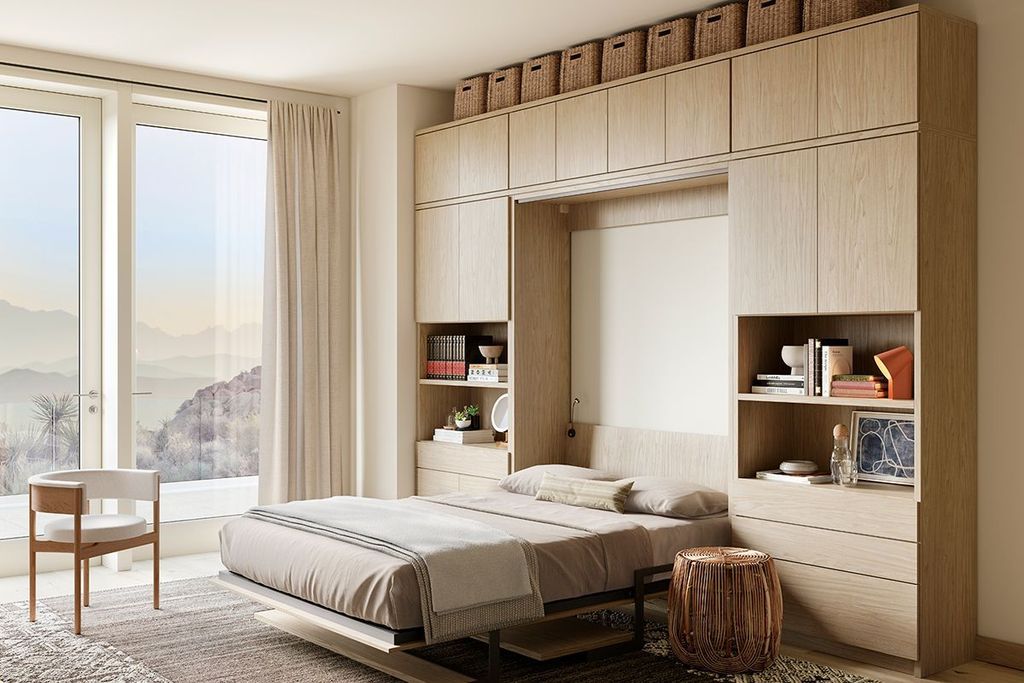
Using Murphy Beds in the apartment modules creates flexible space at an affordable price.
| Day | Night |
|---|---|
| Lounge / Family | Master bedroom |
| Study | Bedroom 2 |
| Dining | Bedroom 3 |
The kitchen, toilet and shower room would be fixed.
New apartment development is the primary solution to the housing crisis. There is not enough land for free-standing houses in our major cities.
Low-quality sites to redevelop
These ugly old shops on Warragul Road shops near Holmesglen station are a classic example of an under-utilized commercial site that needs to be redeveloped.
Individually these holdings cannot be redeveloped effectively and it may take decades for a developer to buy them all – if they ever could.
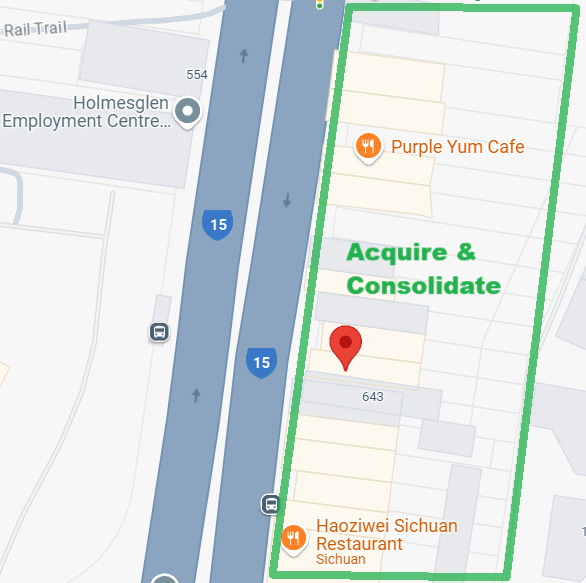
The new apartment blocks should contain commercial space on the ground floor.
High quality redevelopment
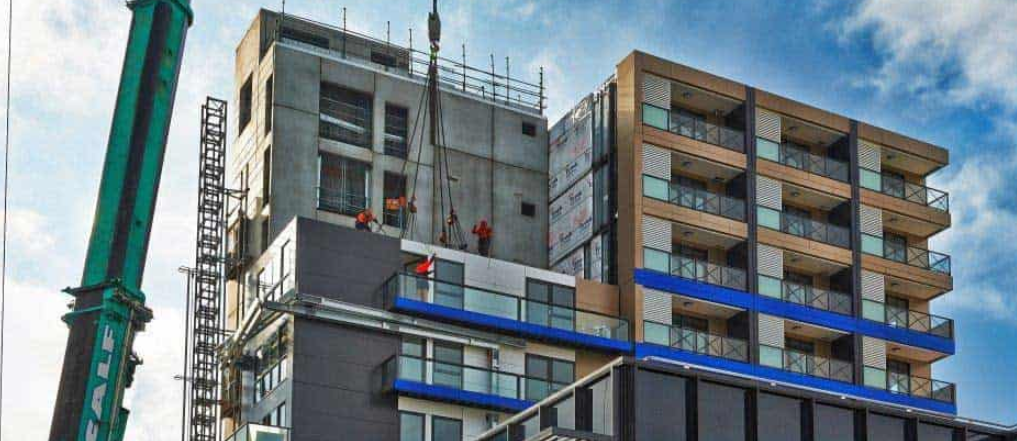
Governments need to drive development so that large sites can be acquired for mass-produced apartment modules.
The private sector cannot acquire large enough sites and then has to build expensive and inefficient bespoke structures.
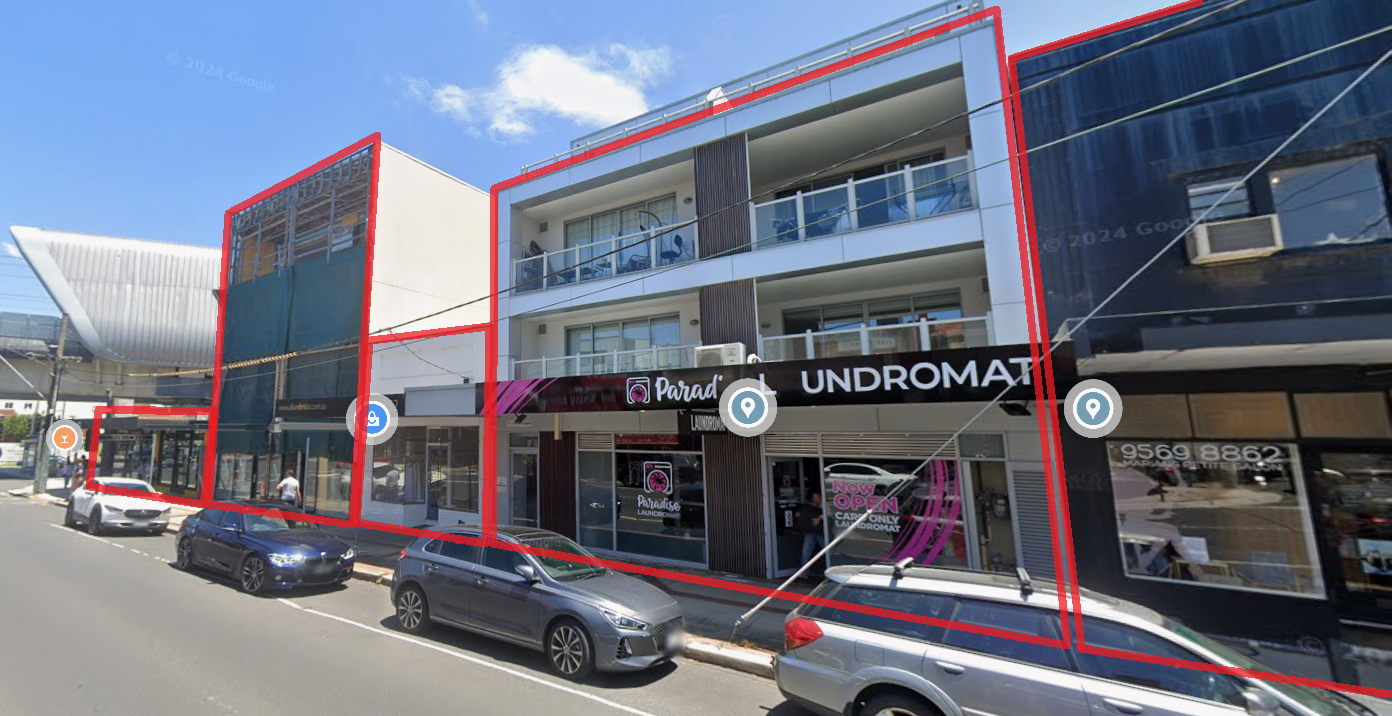
Low quality redevelopment
In this case two site owners have redeveloped their sites separately to create a chaotic and inefficient mess of low quality housing with small commercial spaces. The other three site owners are now ‘trapped’ with sites that cannot be developed.
More examples
Old shops on Springvale Road near Springvale Railway Station.
Old shops near Syndal Railway Station.
These sites are everywhere if you start looking. (These examples are all in Melbourne)
If the government does not consolidate the sites then it could be decades before private buyers can do the job – if they ever can.
Recycling office towers
In Melbourne 86 city office blocks (Oct 2025) are sitting empty but cannot be redeveloped into housing due to strict planning rules and wafer-thin margins for private-sector developers. Our support for Work From Home should increase the number of offices available for conversion.
The government should buy these and redevelop them into housing even if it makes a slight loss.
Planning rules should be amended for these refits. There is no need for bedrooms, toilets or shower rooms to have direct natural light. Removing this constraint allows office space to be converted more easily. The existing office windows would be used for the apartment daytime living rooms.
Benefits of acting on Housing
- Create more quality housing
- Create more employment
- Create a higher quality urban environment
- Can be managed to be of low or no cost to the taxpayer.
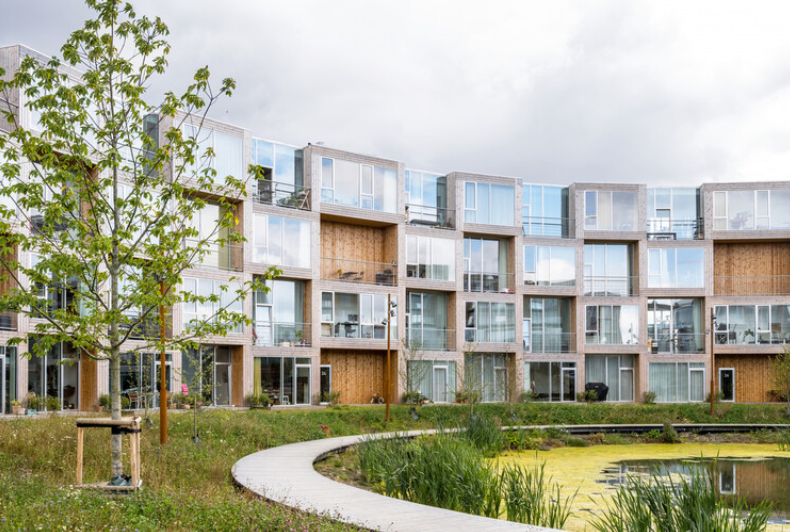
More townhouses

We would strongly encourage all redevelopment of traditional house blocks to be of higher density such as town houses.
Housing Australia could be tasked to buy run-down single homes and facilitate them being turned into duplex homes such as the above.
More houses

Prefabrication and 3D printing are two ways to speed up house construction.
We are impressed with the speed at which concrete prefabricated houses can be built to lock-up stage – typically 10 days. These houses are also highly bushfire and cyclone resistant. We may facilitate mass production of this type of housing after disasters.
However, in general cities need to go up rather than sprawling out over farmland and natural habitat.
Disaster-resistant homes

As climate change continues more flimsy stick-built houses will be destroyed by floods, cyclones and bushfires.
Traditional building methods are too slow to replace these losses and just build ‘more of the same’ houses that will be destroyed again soon. This will exhaust insurance companies and make premiums unaffordable.
A solution is to provide a resilient mass-produced housing product to replace destroyed housing.
Pre-cast concrete houses with steel roof trusses, steel roofs, metal-framed double-glazed windows and fire doors may be part of this solution. These can be built in 10 days.
Government insurance
Commercial insurance may need to be augmented with a government land-tax based scheme that covers everyone for complete loss of a structure or the land itself.
The catch would be that:
- This would only provide a ‘standard’ disaster-resistant structures suitable for flood, fire or cyclone prone regions, not a rebuild of the pre-existing structure
- If the land itself is “lost” (i.e. washed away, etc.) the replacement block may be some distance away and of a smaller size
- Contents may not be covered, or only ‘basic’ contents.
People would be free to get ‘extra’ insurance if they can afford it.
This could be needed due to the spiralling insurance crisis caused by climate change disasters.
Solar roofs
All new structures should be built with solar roofs to maximize energy collection from the sun.
Building a simple gable or monoslope roof is cheaper than a complex hip roof offsetting the cost of adding the actual panels.
73 per cent of Australians support making solar a standard feature of all new and renovated homes, apartments and commercial buildings.
Relocatable Housing
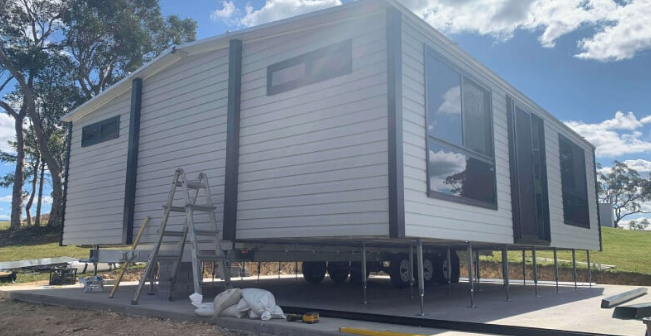
Caravans and relocatables should to be used for housing, provided they meet appropriate standards regarding fire safety, insulation and structural integrity.
Like a regular house, connection to appropriate sewerage systems would be mandatory. Connection to mains electricity and water may not be needed if renewables and tank water was available.
This would be particularly useful after natural disaster in which housing was destroyed.
Energy efficient homes

All new housing should be energy efficient.
This probably starts with requiring double-glazing for all windows to prevent heat gain and loss through windows. If all new windows were required to meet this standard the additional cost would be minimal due to mass-production.
Double-glazing and wall insulation is also required for sound deadening in apartment blocks.
Recent moves to cut “red tape” can just lead to more flimsy, poor-quality, energy-intensive homes that fall apart in bad weather.
Tax Changes
Closing property investor tax rorts
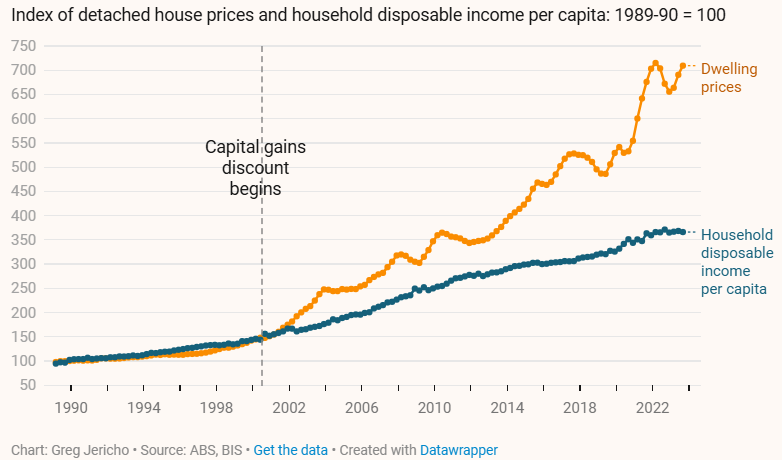
- Remove Negative Gearing and the Capital Gains Tax Discount on residential property.
- Add a developer subsidy for creating new housing (drip fed for each stage of construction)
- Negative gearing and the CGT discount cost about $B17 per annum now and $250 billion over the next decade. The measures above save enough money to directly fund apartment creation and much more public housing. (The 2026 Federal Budget has provided welcome reform in this area)
- Allow residential property investors to move their funds to super tax free – if they do it within a year of CGT being abolished.
- The exit of speculators from the residential property market and the creation of new housing allows first home buyers into the market.
(See also other tax changes)
Rents costs will be reduced
Landlords have always let property for the highest value the market will bare.
If that rent does not cover their expenses and tax then that’s too bad for the landlord – they need to sell. They can’t increase rent beyond what people will pay.
Our tax changes encourage landlords to sell investment properties to first-home buyers who then will not need to rent. Thus demand for rental properties is reduced at the same rate as properties are removed from the rental market.
Adding to supply at this point will reduce demand for existing rental properties, lowering rents. (See Riccardo’s Law of Rent, 1809)
Bad ‘First Home Buyer’ ideas
We oppose schemes that push up demand without increasing supply:
- “Letting” home buyers use their super – which will force everyone to use up their super and will push up property prices. 🔗
- “First Home Buyer” grants – which just push up property prices. 🔗
- “5% deposit” and “shared equity” schemes – these just push up prices.
- Allowing further low-density urban sprawl over farmland in areas with no amenities.
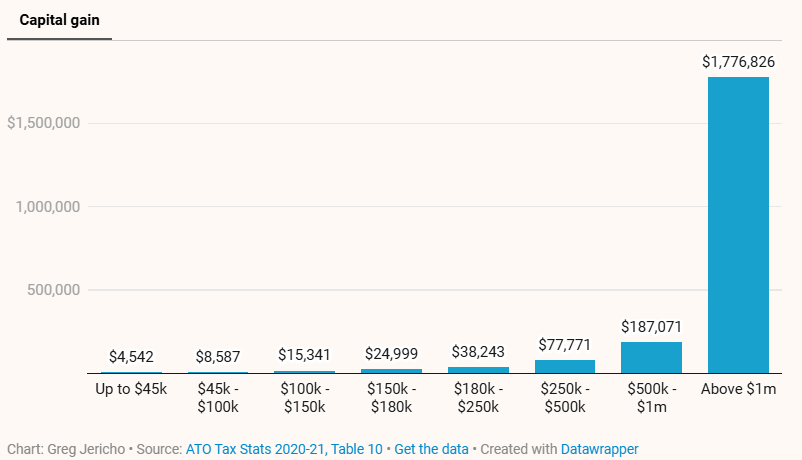
CGT primarily benefits the top 1%
We welcome moves in the 2026 Federal Budget to cut back this tax rort.
References
- Who benefits from negative gearing (PDF, Australia Institute)
- IMF says scrap GGT discount
- The awful truth at the heart of Australian housing policy (Greg Jericho, Guardian)
- Roundtable was a rare chance for reform. Instead we got small ideas (Australia Institute)
- House prices to climb as expanded first home buyer scheme kicks off (ABC)
- CGT tax discount to cost $250 Billion over the next decade (Guardian)
- The 2026 budget in seven graphs (Greg Jericho, Guardian)
- Correcting misleading claims about Labor’s 2026 budget (Saul Eslake, Guiardian)